Stained Glass at Home: Three Rooms and How to Get the Look
Three concept studies from Light as Material, what the coloured light is doing in each, and the window films and glass that bring a version of it home.
#ad · This page contains affiliate links. If you buy through one, I may earn a commission.
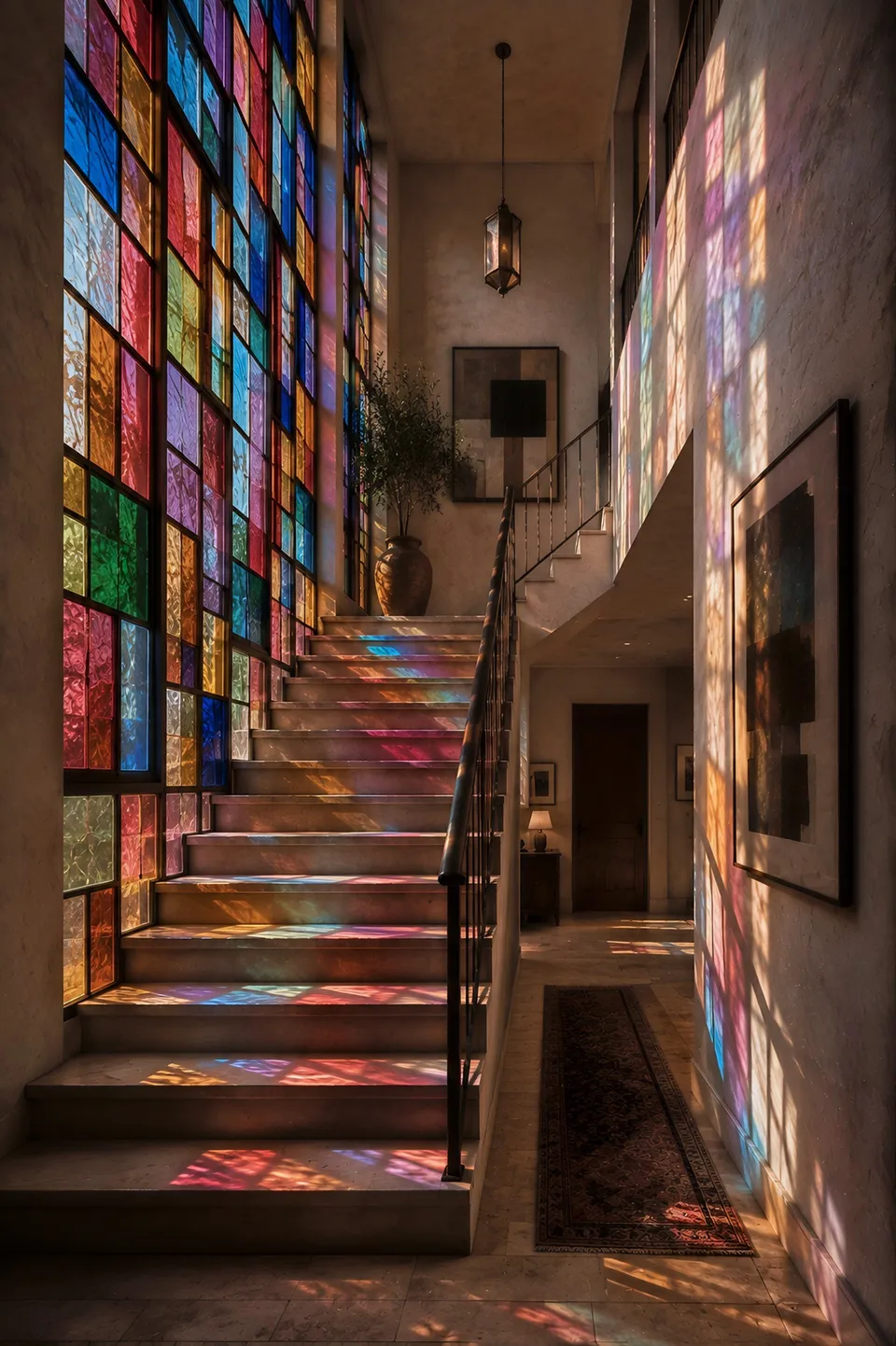
Stained glass turns daylight into colour you can stand in. On a sunny afternoon the pattern leaves the window and travels: across stair treads, over bedlinen, up a plastered wall. By evening it has gone, and the window becomes a picture again.
The three rooms below come from Light as Material, a series of concept studies about light as something that shapes a space. Each uses coloured glass for a practical reason: a tall stair window that needs privacy, a bedroom that faces the street, a long gallery passage with nothing to hold the eye. Under each room is the piece that brings a version of it home, and the full edit follows at the end.
01The Coloured Stair Hall
The glass runs the full height of the stair, so the colour shifts as you climb: amber low down, cobalt and green near the landing. The walls stay plain plaster and the treads plain stone. That restraint lets the colour read as light.
A stair hall walled in coloured glass, where every step holds a different light.
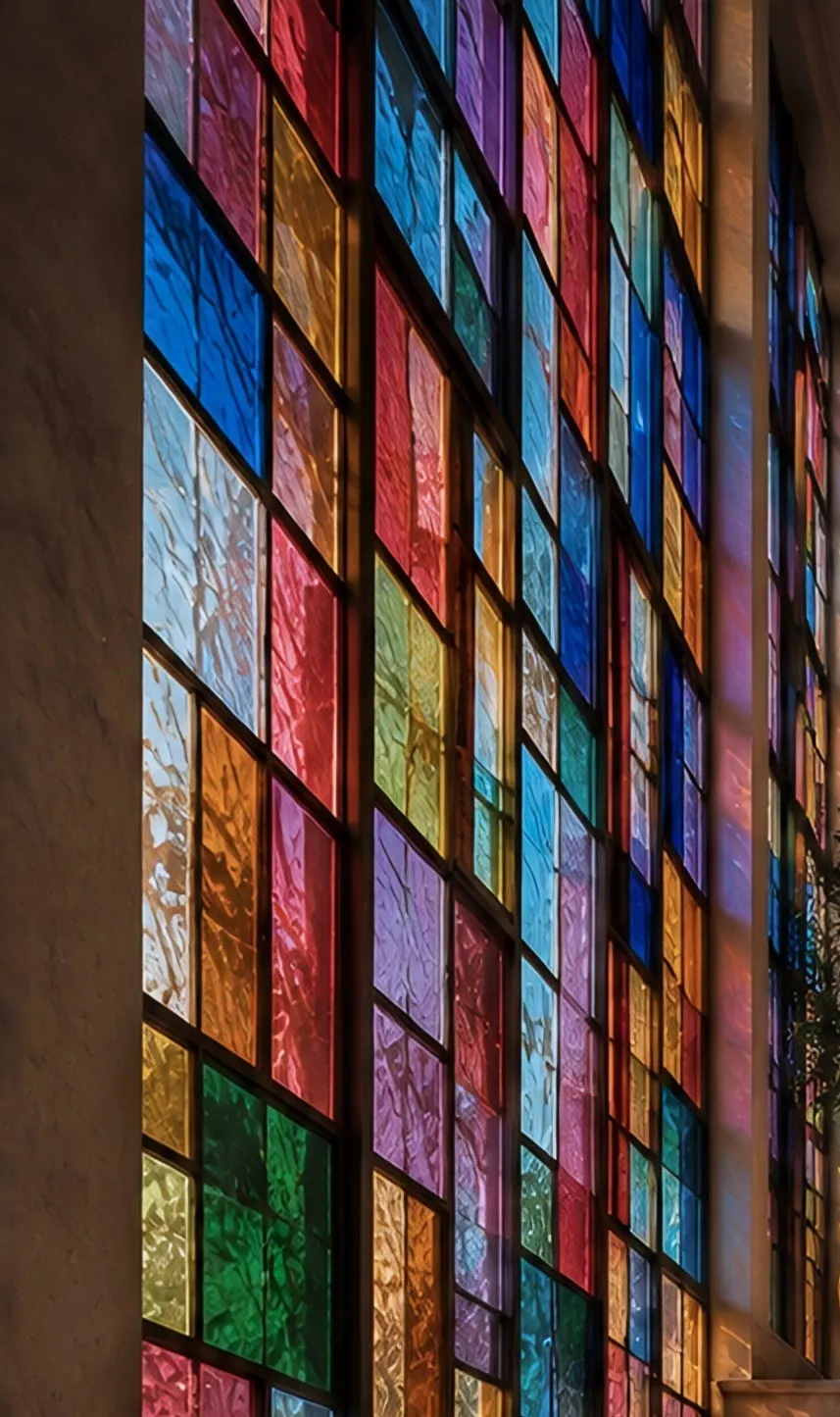
Haton jewel-tone stained-glass window film
A similar jewel-toned film, no new glass needed. Diamond lattice where the stair hall uses squares.
The Stained-Glass Bedroom
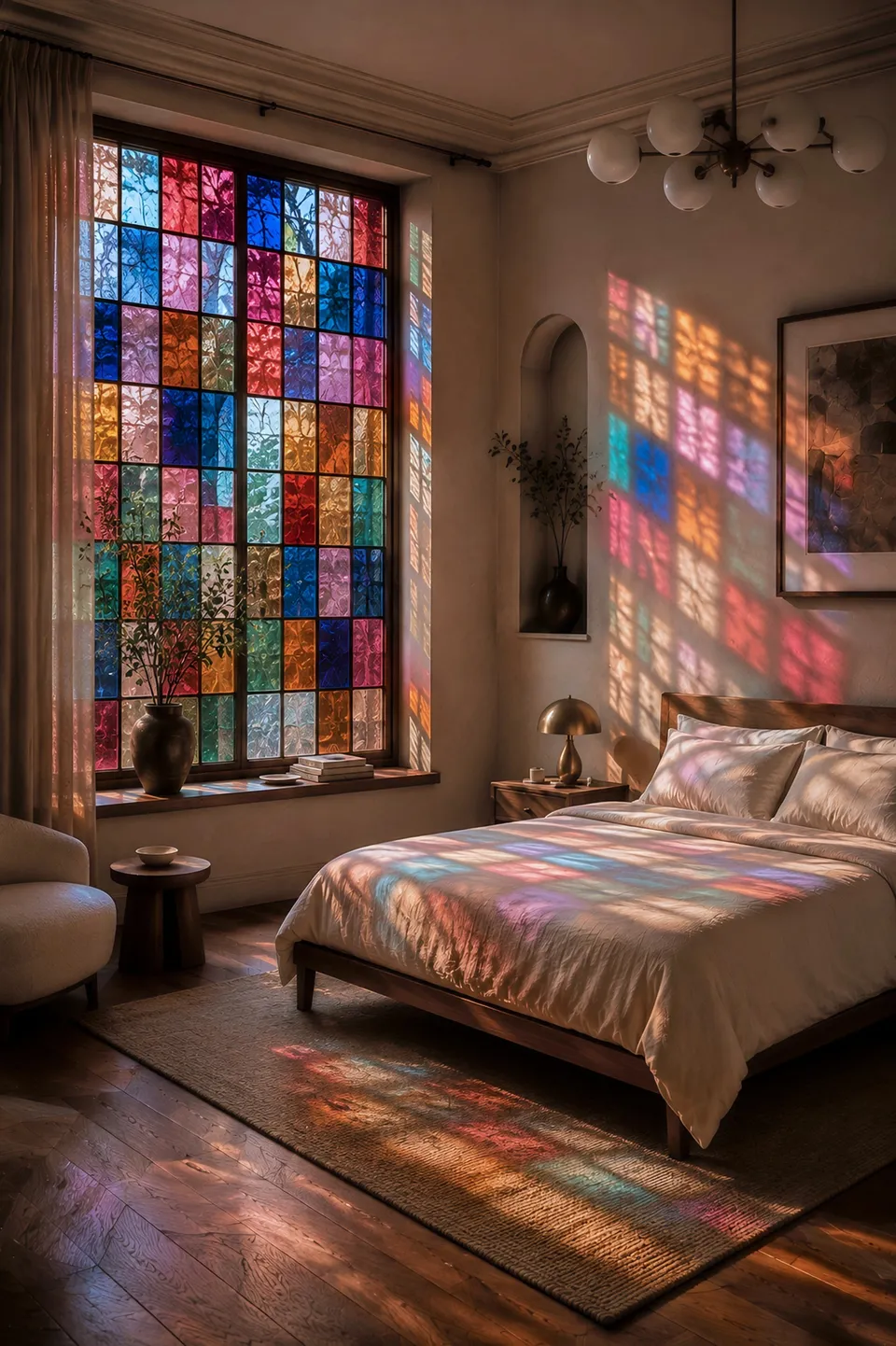
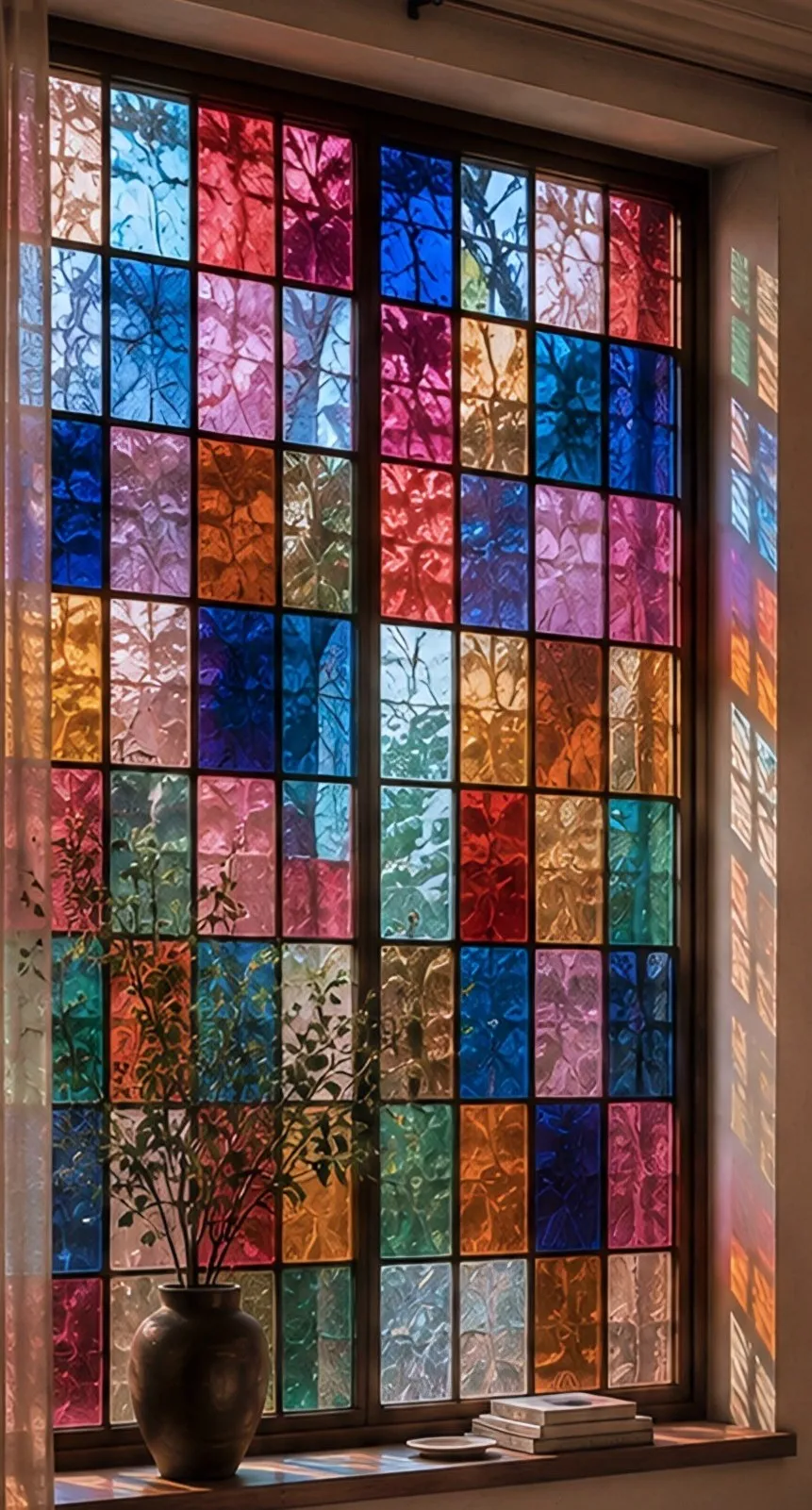
One tall window, glazed in squares of colour, does two jobs here. It gives privacy by day without a blind, and it throws coloured light across the bed in the late afternoon. The rest of the room is warm timber, linen and a single table lamp, so the window stays the only pattern.
rabbitgoo stained-glass window film, 90 x 200cm
A similar stained-glass film sized for a full window, with privacy by day.
The Dichroic Glass Gallery Passage
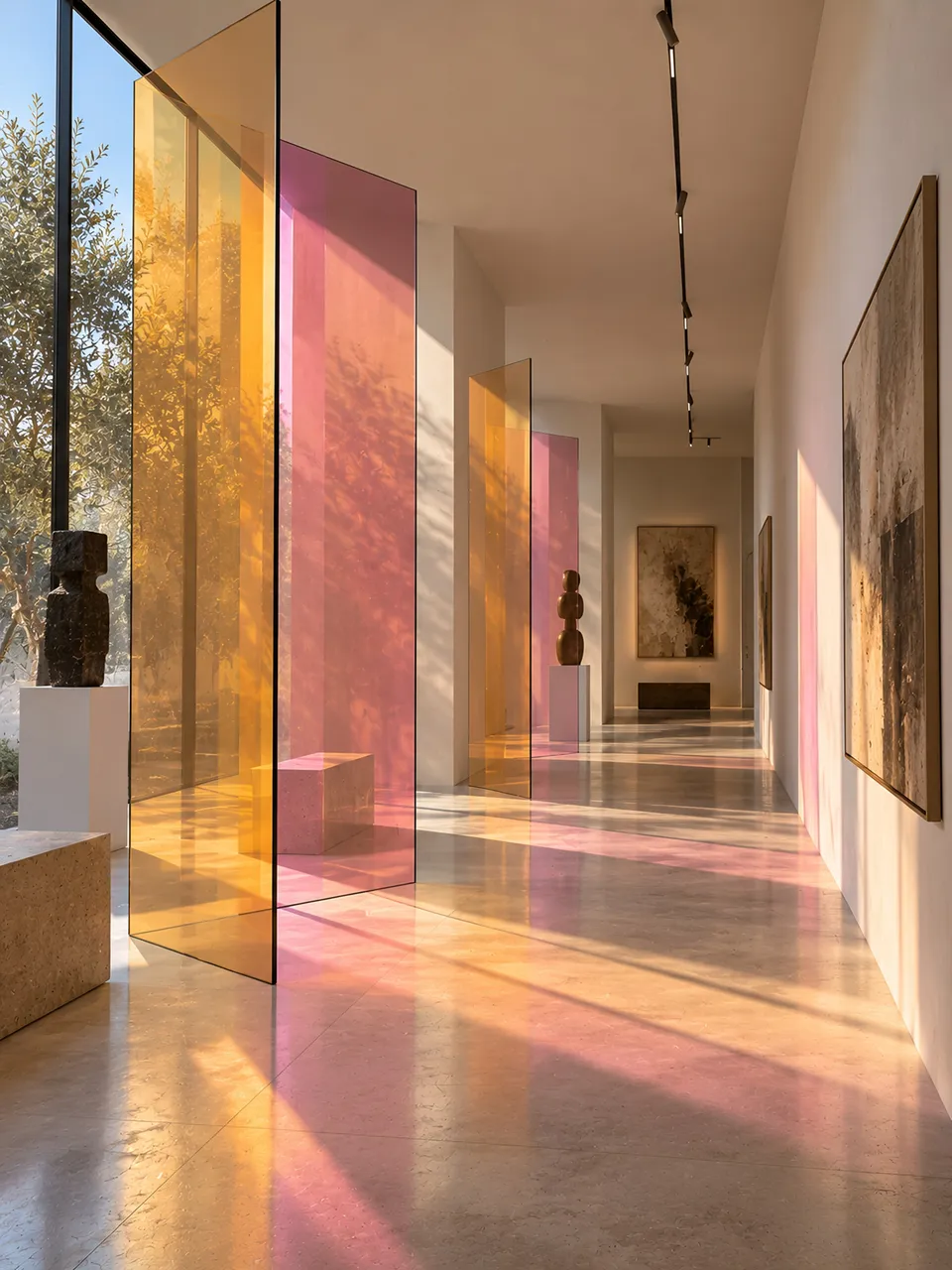
Freestanding dichroic glass planes filter daylight into amber and rose across a quiet gallery passage.
Dichroic glass carries a thin multi-layer coating of metal oxides. It passes some colours of light and reflects others, so a single pane can look amber from one side and rose from another, and the colour on the floor moves with the sun. At home the same effect comes from dichroic film on an existing pane.
Colours in these rooms
Sampled from the glass in The Coloured Stair Hall. Keep the walls pale, put one or two of these in glass or textiles, and let dark timber do the grounding. More palettes with hex codes
05How to get the look at home
- Start with one window. A single panel of colour on a stair, landing or bathroom window carries further than a wall of it.
- Use static-cling film in a rented home. It holds to the glass without adhesive and lifts off cleanly. Check your tenancy agreement first.
- Keep the room around it plain. Plaster, pale stone and dark timber let the colour read as light.
- Choose a south or west window. Coloured light needs direct sun. A north window gives a softer, steadier tint.
Shop the edit
rabbitgoo stained-glass window film, 90 x 200cm
Sized for a full bedroom window, with privacy by day.
Shop similar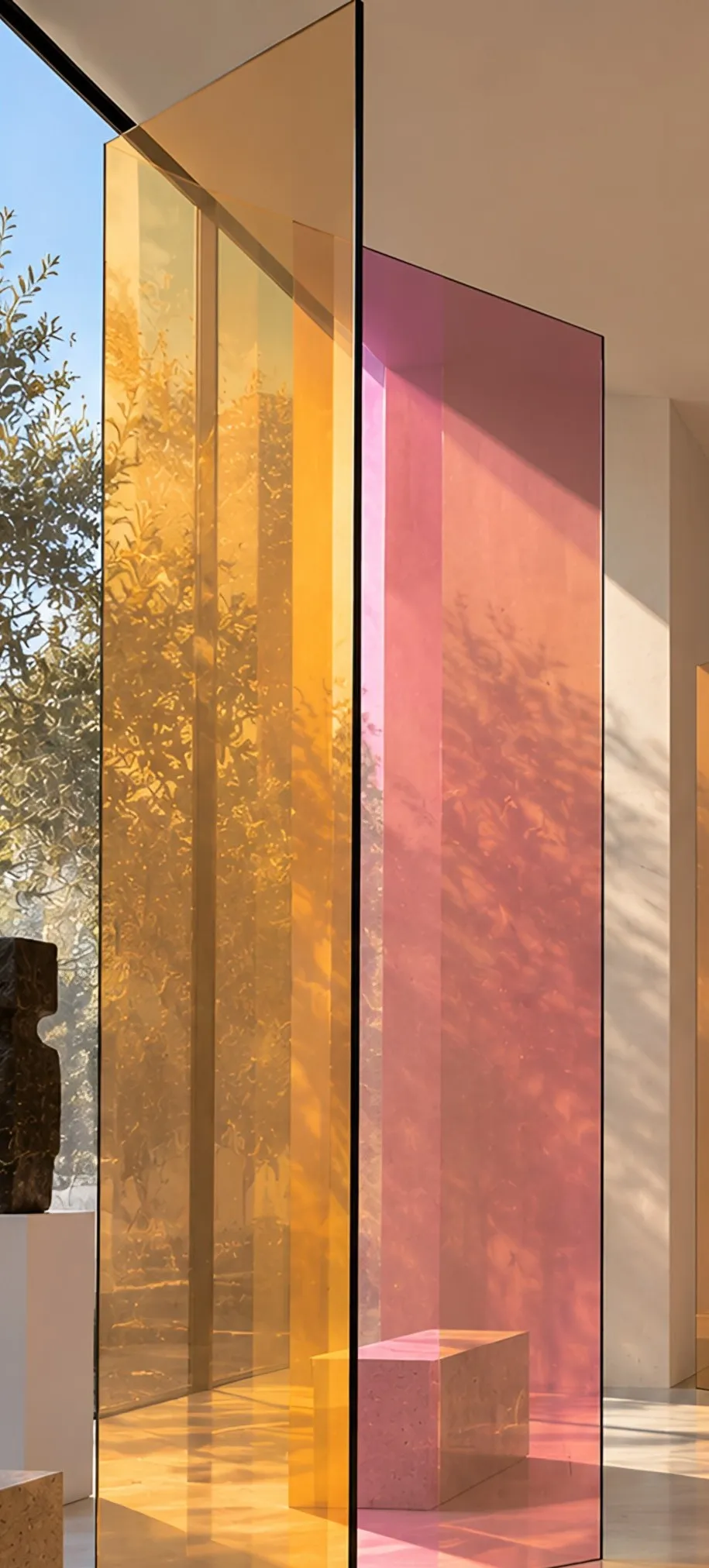
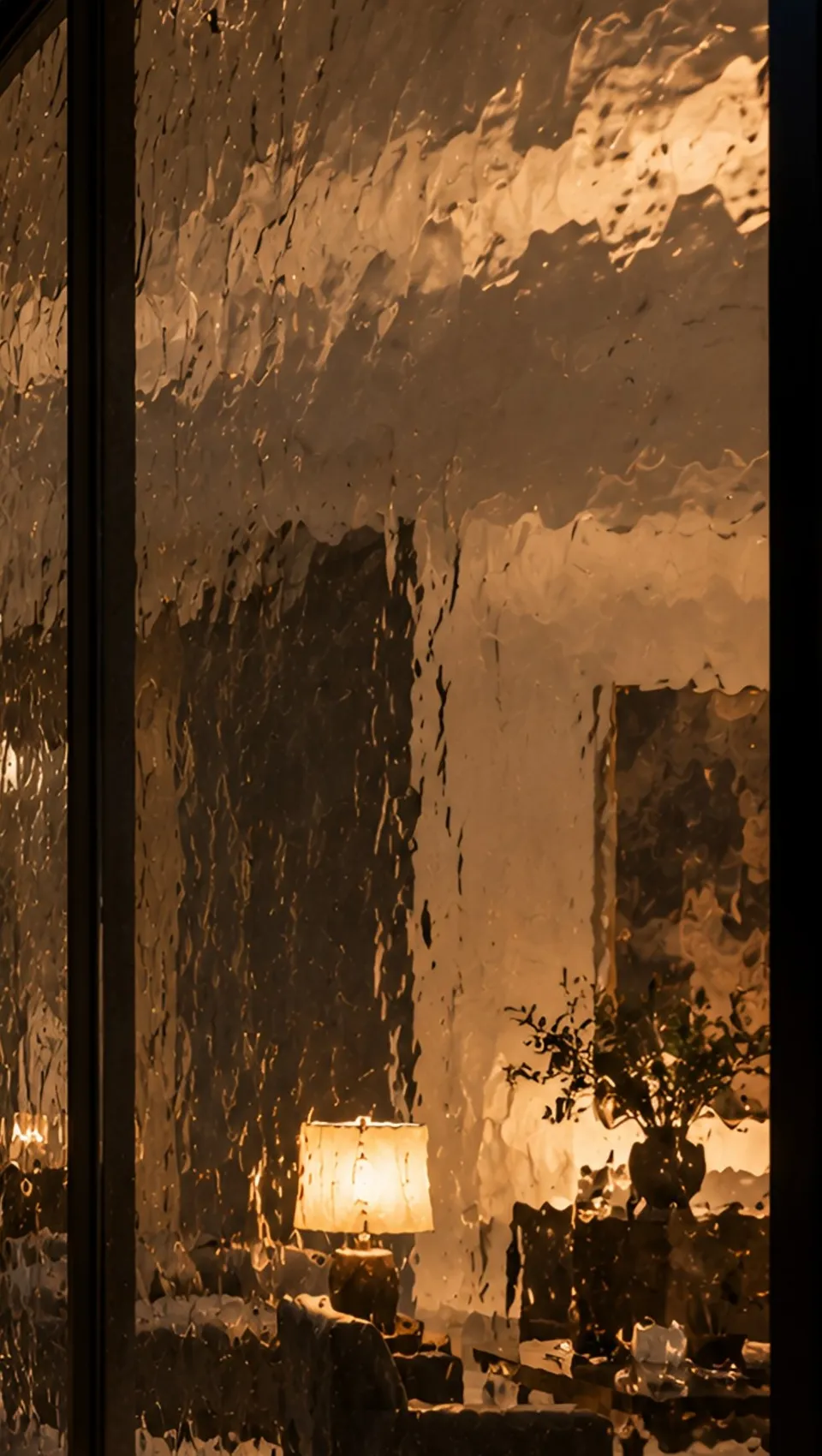
ULAROOM amber ribbed glass cordless lamp
Bends warm light the way cast glass does at night.
Shop the pieceQuestions
Does stained-glass window film block light?
It colours the light that passes through. Darker colours pass less of it, so a film with plenty of amber and pale glass keeps a room brighter than one built on deep blue and violet.
Can I use window film in a rented flat?
Static-cling film holds to the glass without adhesive and peels away cleanly, so it suits rented homes. Check your tenancy agreement before you fit it.
What is dichroic glass?
Glass with a thin multi-layer coating of metal oxides. It passes some wavelengths and reflects others, so its colour changes with the viewing angle and the time of day.